Norweco Singulair Green Wantage NJ: A Better Approach to Residential Wastewater


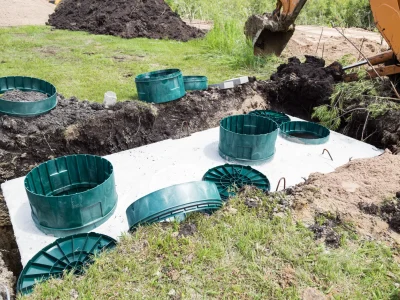
In a place like Wantage, wastewater is not an abstract utility topic. It is a property issue, a groundwater issue, and very often a quality-of-life issue. Homeowners in Sussex County tend to pay attention to roofs, wells, driveways, and heating systems because those systems are visible and immediate. Wastewater treatment usually gets less attention until a yard stays wet, drains slow down, or a real estate transaction exposes an aging septic setup that no longer fits the property’s needs.
That is where a system like the Norweco Singulair Green enters the conversation. When people search for norweco singulair green Wantage NJ, they are usually not looking for a trendy upgrade. They are trying to solve a practical problem. They may have a small lot, difficult soil, a high water table, an older home being expanded, or a replacement scenario where a conventional septic layout simply does not fit the site without major compromises. In those cases, a residential treatment unit can offer a better path, provided it is selected, installed, and maintained with care.
I have seen homeowners approach these systems with equal parts curiosity and skepticism. That reaction is fair. Anything more advanced than a basic septic tank raises legitimate questions about complexity, operating cost, and maintenance. Those questions deserve direct answers, not sales language. The truth is simple: an aerobic treatment system is not the right answer for every property, but on the right site it can be a very smart one.
Why conventional septic systems sometimes fall short in Wantage
Wantage has a mix of rural lots, older homes, sloped norweco singulair green Wantage NJ terrain, and properties where site conditions vary more than owners expect. One parcel may have enough suitable area for a straightforward septic replacement. The next may have shallow restrictive layers, poor percolation, or limited room to meet setbacks from wells, property lines, streams, or other site features.
A standard septic system depends heavily on the soil to finish the treatment process. The tank separates solids and grease, but the dispersal field and native soil do much of the real polishing. When soils are tight, seasonally wet, or constrained by lot geometry, the margin for error shrinks quickly. The result can be a design that is technically possible but not especially forgiving. In real life, forgiving matters.
That is one reason advanced treatment units have become part of the residential wastewater conversation. By treating wastewater more thoroughly before it reaches the disposal area, these systems can reduce the burden placed on the soil. In some cases, that allows a site to support a design that would otherwise be difficult or impossible with a conventional arrangement.
For homeowners, the practical value is not just regulatory. Better treatment upstream can mean a smaller or more effective soil dispersal component, less stress on the leach area, and improved environmental performance where groundwater protection is a concern. Those are meaningful advantages in a township where private wells are common and land use is closely tied to local soil and drainage conditions.
What the Singulair Green system is designed to do
The Norweco Singulair Green is a residential wastewater treatment system that uses aerobic treatment rather than relying solely on passive settling and soil absorption. In plain terms, it introduces oxygen into the process so naturally occurring bacteria can break down waste more effectively. That extra treatment step can significantly improve effluent quality compared with what leaves a standard septic tank.
For a homeowner, the concept is easier to grasp if you think about the difference between storage and treatment. A conventional tank does some treatment, certainly, but much of its role is separation and retention. An aerobic unit is built to treat the wastewater more actively before discharge to the downstream component.
That distinction matters because the downstream component, whether it is a drip field, shallow dispersal area, or another approved method, performs better when the incoming water is cleaner. Solids carryover is reduced, organic loading is lower, and the soil interface has a better chance of staying functional over time.
This does not mean the system is maintenance-free or immune to misuse. It means the treatment train is stronger. On constrained residential properties, that stronger treatment can make the difference between a workable design and a poor compromise.
Why this approach fits certain Wantage properties so well
A lot of wastewater decisions come down to constraints. When I talk with homeowners about advanced treatment in northern New Jersey, the conversation usually centers on one or more of the following conditions.
- Limited usable area for a conventional septic field
- Challenging soils or marginal percolation
- Replacement of an older failed or undersized system
- Renovations that increase bedroom count or design flow
- Desire for better effluent quality near sensitive groundwater conditions
Those are not fringe situations. They come up often enough that homeowners, builders, and designers in the region should understand the option clearly.
Consider a common scenario: an older house on a rural road, built decades ago, with a septic system that made sense at the time but no longer reflects current standards or present-day occupancy. The owner wants to add living space or legalize a bedroom count that was never formally accounted for. The existing septic area is already tight. There is a well on one side, a driveway on another, and grade changes that limit layout flexibility. On paper, the lot still looks decent. On the ground, it is far more restricted.
That is where the value of better pretreatment becomes tangible. A system like the Singulair Green can open design possibilities by delivering cleaner effluent to the final disposal area. It is not magic, and it does not erase permitting requirements, but it can change the engineering equation in a useful way.
The difference homeowners notice first
The first thing many people notice is not visible at all. It is peace of mind. Homeowners who move from a marginal conventional setup to a properly functioning advanced treatment system often stop worrying every time there is a heavy rain, a holiday weekend, or a stretch of high water use. They are no longer wondering whether laundry day plus houseguests plus spring thaw is going to push the system too hard.
The second thing they notice is that these systems reward attention. A conventional septic tank can go ignored for too long because its problems stay hidden until they become expensive. An aerobic unit asks for a more active relationship. That may sound like a drawback, but in practice it often works in the owner’s favor. Routine service catches issues early. Components can be inspected before failure becomes a yard full of sewage or a clogged dispersal field.
That is an important cultural shift. Homeowners are used to maintaining boilers, water treatment equipment, generators, and pumps. Wastewater treatment deserves the same mindset. If you accept that premise, the Singulair Green begins to look less like a burden and more like a managed household system.
Installation quality matters more than branding alone
People sometimes focus on equipment brand as if the product alone guarantees performance. It does not. A well-designed and properly installed system from a reputable manufacturer stands a much better chance of long-term success than a poorly matched or poorly installed alternative, but site work still decides a lot.
In Wantage, the quality of the design and installation can matter as much as the treatment unit itself. Grading, tank placement, access for service, frost considerations, electrical supply, alarms, control settings, and the downstream dispersal method all affect performance. So does traffic control. I have seen otherwise sound wastewater layouts compromised because people assumed a lawn tractor, pickup, or delivery vehicle would never cross a certain area. Over time, they did.
The most successful projects usually have a few traits in common. The owner understands what is being installed. The designer has a realistic view of the site rather than forcing a favorite detail onto every lot. The installer respects elevations and specifications. The service provider is involved early enough to advise on access, controls, and future maintenance needs.
That coordination is worth more than flashy promises.
What maintenance really looks like
A Norweco Singulair Green system is not a bury-it-and-forget-it installation. It needs periodic inspection and maintenance. For some buyers, that is the main hesitation. They worry about service contracts, moving parts, electricity, and the possibility of nuisance alarms.
Those concerns are reasonable, but they need context. All wastewater systems require maintenance, even when owners pretend otherwise. The difference is that advanced treatment systems make the maintenance more explicit.
A norweco singulair green Wantage NJ typical owner should expect regular professional service, periodic tank pumping based on use and solids accumulation, and some basic awareness of what not to send down the drain. That last point matters more than people think. Wipes, excessive bleach, grease, paint residues, and non-biodegradable materials can create trouble in any onsite system, but advanced units perform best when household habits support the biology rather than disrupting it.
In real homes, the biggest operational issues usually come from ordinary misuse, not exotic equipment failure. A family treats the toilet like a trash can. A water softener or leaking fixture overloads the system with unnecessary flow. Someone reroutes a sump pump or foundation drain where it should never go. Or a power outage goes unnoticed longer than it should.
These are manageable problems, but only if the owner treats the wastewater system as a working utility and not a buried mystery.
The trade-offs homeowners should understand before choosing one
No responsible professional should talk about advanced treatment without talking about trade-offs. The Singulair Green may be a better approach for many sites, but “better” does not mean simpler in every respect.
First, the system uses mechanical and electrical components. That means there is some dependence on power and on equipment that will eventually need service or replacement. A basic septic tank has fewer active parts. If absolute simplicity is your only priority, conventional systems still hold an edge there.
Second, service discipline matters. Skipping inspections to save a little money can cost a lot more later. With a standard septic tank, neglect is common and sometimes hidden for years. With advanced treatment, neglect tends to show up sooner.
Third, the rightness of the system depends on the site. If a property has excellent soils, generous setbacks, and plenty of room for a conventional field, there may be no compelling reason to choose a more sophisticated treatment unit. Good engineering is about matching the solution to the lot, not upselling complexity.
Fourth, up-front costs can be higher. Exact pricing varies too much by design, excavation conditions, electrical work, and the required dispersal method to give a universal number that means much. Still, homeowners should expect advanced treatment systems to involve more initial investment than a bare-bones conventional setup. The more useful comparison is not base cost versus base cost, but total project feasibility. If the alternative is a difficult redesign, a nonviable expansion, or repeated trouble with a marginal system, the numbers look different.
Cold weather, power loss, and year-round use
Because Wantage sees real winter conditions, homeowners often ask whether aerobic treatment units are dependable in the cold. In properly designed and installed systems, winter itself is not usually the main problem. Wastewater has thermal mass, the treatment process generates some biological activity, and buried components are protected by grade and cover. Trouble tends to come from poor installation details, shallow vulnerable piping, neglected alarms, or long periods of no use in houses that are only occupied intermittently.
Power outages deserve a more practical discussion. Since the Singulair Green relies on active treatment, loss of power affects operation. That does not mean a short outage instantly creates a crisis, but it does mean owners should understand what happens during an extended interruption. If a property already has a standby generator for the well pump, refrigeration, and heating equipment, including wastewater components in the planning is wise. In rural parts of New Jersey, that kind of resilience planning is rarely wasted effort.
Seasonal occupancy is another nuance. Full-time residences tend to give biological treatment systems a steadier flow and nutrient load. Vacation homes or lightly used properties can still be served, but operating patterns should be considered during design and maintenance planning. A system behaves best when its actual use resembles the assumptions behind the design.
What a homeowner should ask before moving forward
A lot of frustration can be avoided if owners ask direct questions early. Not just, “How much does it cost?” but, “Why is this system recommended for my lot, what are the service expectations, and what does a normal year of ownership look like?”
Here are the questions that tend to produce useful answers:
- What site constraints make advanced treatment preferable here?
- What downstream dispersal method is being paired with the treatment unit?
- How often will the system be inspected and pumped under normal use?
- What alarms or owner notifications should I expect?
- Who will service the system locally after installation?
Those questions cut through vague sales language quickly. If the answers are clear and specific, that is a good sign. If the answers stay broad, or if no one wants to explain maintenance in plain English, I would be cautious.
Real estate value and buyer perception
Advanced wastewater treatment can help a property, but buyer perception depends on presentation. If a house listing simply mentions “special septic system” with no context, some buyers assume hassle. If instead the system is documented, permitted, well maintained, and explained as a high-quality treatment solution designed for the site, the reaction is often much better.
In markets like Wantage, informed buyers understand that rural homes come with private infrastructure. They know wells need testing and septic systems need care. A maintained Norweco Singulair Green setup can actually reassure a buyer if records show professional service and compliant installation. The key is documentation. A folder with design plans, permits, service reports, pumping receipts, and contact information for the service provider can remove a lot of uncertainty.
The opposite is also true. An advanced system with no service history makes people nervous fast. Sellers sometimes underestimate how much that matters during inspection and due diligence.
Daily habits that help the system last
Good performance is not only about engineering. It is also about ordinary household behavior. A few sensible habits go a long way.
Water use should be steady rather than abusive. Doing ten loads of laundry back to back is harder on any onsite system than spreading them through the week. Fixing leaking toilets and dripping fixtures is more important than many owners realize because slow constant flow steals treatment capacity every day. Kitchen grease belongs in the trash, not the drain. So do wipes, paper towels, hygiene products, and harsh chemical leftovers.
None of this is glamorous advice, but it is the difference between a system that ages gracefully and one that develops avoidable trouble. I have watched homeowners spend thousands correcting issues that started with habits they thought were harmless.
Why the local support network matters
When evaluating norweco singulair green Wantage NJ, one of the most overlooked factors is the local support ecosystem. A treatment unit is only as homeowner-friendly as the people available to design, install, inspect, and service it. On paper, many systems look capable. In the field, local familiarity matters.
You want professionals who understand regional soil conditions, township and county expectations, winter operation, and the practical realities of rural residential life. They should know how to explain alarm conditions without drama, schedule maintenance reliably, and respond when a pump, aerator, or control issue appears. Homeowners are often willing to maintain a system if they feel supported. They resist maintenance when everything feels opaque.
That is why the best projects are usually not just equipment decisions. They are team decisions. The manufacturer matters, yes, but so do the engineer, installer, electrician, pumper, and service technician. A strong local chain of responsibility creates confidence. A weak one creates finger-pointing.
A better approach, when the site calls for it
For the right property, the Norweco Singulair Green is not just a substitute for a conventional septic arrangement. It is a more intentional way to handle residential wastewater. It treats earlier, protects the downstream dispersal area more effectively, and offers a path for properties that might otherwise be boxed in by soil, space, or replacement limitations.
That does not make it universally superior. Some lots do perfectly well with a traditional system, and simplicity has real value. But where site conditions are tight and performance matters, this kind of treatment can be the difference between barely acceptable and genuinely robust.
Homeowners in Wantage tend to appreciate systems that earn their keep quietly over time. They do not need hype. They need reliability, serviceability, and an honest match to local conditions. When those pieces come together, the Norweco Singulair Green stands out as a practical and well-reasoned option for residential wastewater treatment.
Excavating New Jersey LLC
406 County Rd 565
Wantage, NJ 07461, United States
Phone: +1 (973) 791-4284
FAQ About norweco singulair green Wantage NJ
How does a Norweco septic system work?
Singulair Green uses aerobic biological treatment in a polyethylene tank, followed by settling and filtration. The treatment unit is one part of a complete wastewater system; the site design also determines how treated effluent is dispersed.
How much does a Norweco septic system cost in NJ?
A useful estimate requires a property evaluation. Excavation access, soil conditions, engineering, electrical work, the disposal field, and restoration can affect the total. Ask Excavating New Jersey LLC for a written scope that distinguishes installation costs from ongoing service costs.
Are Norweco septic systems good?
Singulair Green is an established aerobic treatment option, but suitability depends on the property and proposed design. Compare the model's documented performance, maintenance needs, and total project scope with alternatives before deciding.